If your lower denture slips, causes sore spots, or makes eating feel uncertain, implant-supported dentures might just change how your jaw performs—and honestly, how you live day to day. They anchor right into the jawbone, giving way more retention and bite stability than old-school lower dentures, so you can chew with confidence and skip the embarrassment of sudden movement.
Implant-supported dentures preserve jawbone and distribute bite forces more naturally, reducing wear, soreness, and the need for frequent adjustments.
Let's get into why the lower jaw benefits most from implant support, how these systems deliver real stability, what affects their success, and how they stack up against other options. Maybe you'll walk away a step closer to a more secure, comfortable smile—and if you'd like to explore your options with a trusted general dentist in Evansville, IN, getting a personalized evaluation is a great first step.
Understanding Lower Jaw Denture Challenges
Lower dentures have a tough job. They struggle with secure seating, limited suction, and jawbone changes that chip away at support over time.
These challenges hit your chewing, your speech, and your daily comfort.
Common Stability Issues
Your lower denture can tip, rock, or shift because the jaw is a narrow, curved ridge with less surface for suction than the upper jaw. Saliva, tongue movement, and cheek pressure all mess with retention.
A flat or resorbed ridge just doesn’t give the denture much to hang onto. Attachments and clasps on removable dentures help a bit, but conventional bases that rely on suction or adhesives often fail on the mandible.
Even well-made dentures loosen up as bone shrinks after tooth loss, changing the fit over time.
Impact on Oral Function
A loose lower denture makes chewing a hassle and forces you to skip foods like raw veggies, nuts, or steak. You might start favoring one side, which wears down those teeth faster and strains your jaw joints.
Speech can get slurred or even clicky because your tongue needs stable teeth to form certain sounds. Eating and talking might make you self-conscious, so you avoid social meals and your nutrition takes a hit.
Consequences of Poor Fit
Poorly fitting lower dentures cause sore spots and ulcers on the gums from constant rubbing and pressure. Chronic irritation raises your risk of infection and ramps up bone loss under the denture.
Unstable dentures push people toward softer, less nutritious foods, upping the risk of deficiencies. You’ll probably end up at the dentist more often for relines, repairs, or more adhesives—which means more costs and hassle.
How Implant-Supported Solutions Improve Stability
Implants anchor your denture to the jaw, spread biting loads more evenly, and cut down on soft-tissue irritation. You can eat, speak, and keep your bone healthier with way more confidence.
Anchorage Benefits
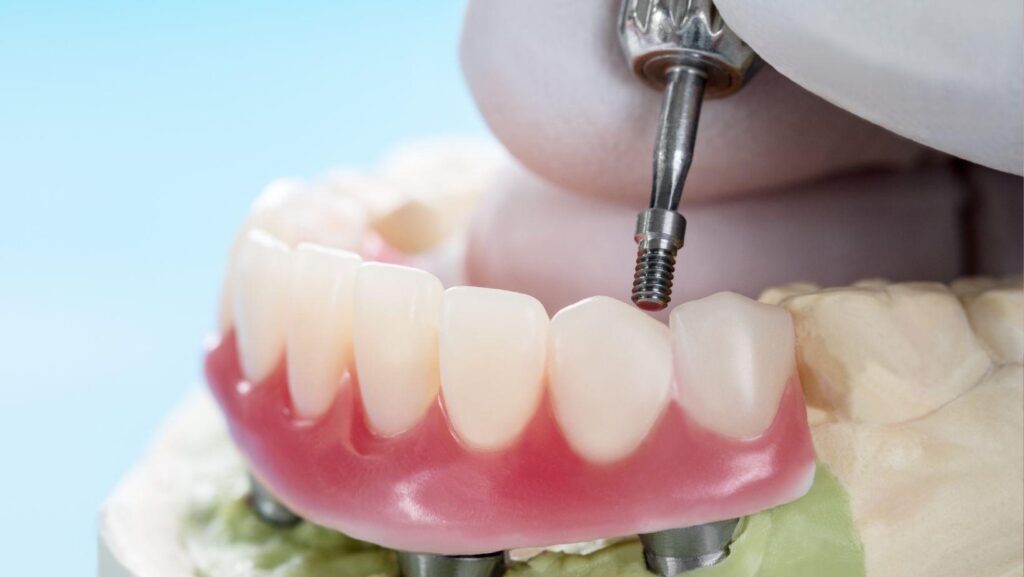
Implant posts in your lower jaw act like artificial tooth roots, securing the denture to bone instead of just resting on gums. Usually, you’ll get two to four implants for a lower overdenture.
Two-implant systems already make a big difference, but four implants bring near-fixed stability for heavier chewing. Implants bond with bone, so your denture resists tipping and lifting when you chew or talk.
You won’t need to rely on adhesives as much, and sudden slippage becomes rare. Attachments—locators, bars, or fixed prosthetics—let you and your dentist fine-tune the retention.
Distribution of Chewing Forces
Implants move chewing forces into the jawbone instead of pounding down on the gum ridge. That shift means fewer sore spots and less tissue compression, which usually causes pain with regular dentures.
Spreading the load across multiple implants lowers stress on any one spot. You’ll chew more efficiently and get closer to natural bite force, so tougher foods like raw veggies and meats won’t knock your denture loose.
Long-Term Comfort and Performance
Implants keep your denture stable against supporting structures, so you get fewer abrasions and sore spots from movement. You’ll need fewer adjustments or relines because the fit stays consistent with the implants and bone.
Implant support slows down the jawbone loss that comes after teeth are gone. Keeping bone volume means your face keeps its shape and your denture keeps fitting, so you get steady function and comfort for years.
Regular check-ins let your dentist monitor attachment wear and keep things working smoothly.
Factors Influencing Success Rates
Bone quality, your self-care, lifestyle choices, and the materials and design of the denture all affect how well implants work. Each piece changes how implants bond, avoid infection, and support stable chewing over time.
Bone Density Considerations
Your jawbone density matters a lot for implant stability. Thicker, denser bone makes it easier to place implants securely and helps them bond faster, especially if you want to load them quickly.
If your bone is thin or porous, you might need longer or wider implants, angled placement, or bone grafting to get solid support. Pre-op CT or CBCT scans let your dentist measure bone and pick the right size and angle for implants.
Healing time depends on bone density too. Dense bone can sometimes handle earlier loading; softer bone usually needs more healing time to lower the risk of failure.
Your medical history (think osteoporosis, long-term bisphosphonates) also affects bone response—don’t skip telling your dentist about these.
Hygiene and Maintenance
You’ve got to keep things clean around your implants to avoid peri-implant mucositis and peri-implantitis. Daily cleaning around abutments and overdenture attachments cuts down on biofilm and inflammation that can break down bone.
Plan on seeing your dentist every 3–6 months unless they say otherwise. During visits, they’ll polish your prosthetic surfaces, check attachment wear, take X-rays for bone loss, and go over cleaning techniques for your setup.
Use soft brushes, mild toothpaste, and antimicrobial rinses if recommended. Don’t use metal tools on implants—your dentist should stick to plastic or specialized scalers to avoid scratching the surface and making it easier for bacteria to stick.
Patient Lifestyle Factors
Smoking, uncontrolled diabetes, and heavy drinking all boost implant failure risk. Nicotine slows blood flow and healing, so if you smoke, your dentist will push for quitting before and after surgery.
Grinding or clenching your teeth (bruxism) can overload implants and cause screws to loosen, implants to break, or bone to shrink. You might need a night guard, splinted implants, or stronger prosthetics to handle these forces.
Weight, nutrition, and sticking to your meds also play a role in healing and long-term results. Be open about all your medications, including steroids or bisphosphonates, and any health conditions. Your choices shape both the surgery plan and how often you’ll need follow-up.
Role of Dental Prosthetics Materials
What you pick for abutments, attachments, and denture bases affects durability, soft-tissue reaction, and maintenance. Titanium is still the gold standard for implants and abutments—strong and body-friendly. Zirconia abutments look better but can be more fragile.
Attachment systems (ball, locator, bar) change how forces spread and how easy it is to keep things clean. Locators are small and forgiving but need new nylon inserts now and then; bars spread out forces but can trap plaque if you can’t get under them.
Denture teeth and base materials matter for wear and bite. Acrylic is lighter and easier to repair; composite or high-impact polymers last longer if you’re tough on your teeth. Talk with your dentist about how often attachments might need replacing and what maintenance could cost over time.
Comparing Alternatives and Next Steps
Implant-supported dentures give you better lower-jaw stability and cut down on chewing problems and bone loss compared to regular removable dentures. You’ll need to balance stability, care, cost, and surgery to figure out what fits your life.
Removable Versus Fixed Options
Removable implant-retained overdentures usually snap onto 2–4 implants and come off for cleaning. You get better grip and chewing power than classic dentures, but the denture still rests on soft tissue and might need rebasing down the line.
Fixed implant-supported bridges or hybrid dentures lock onto multiple implants and stay put. You’ll get close to natural tooth function and less gum contact, but you’ll need more implants, more surgery, and it’ll cost more.
Cleaning matters. Removable options are easier to clean; fixed ones demand extra care at home and regular pro cleanings. Consider your budget, manual dexterity, and how permanent you want your teeth to feel.
Evaluation and Treatment Planning
Your dentist will start with a thorough exam: a clinical check, panoramic and CBCT imaging, and a review of your health and bone volume. This info decides how many implants you need, where they go, and if you’ll need bone grafts or sinus work.
The plan includes a surgical guide, prosthetic design (bar, locator, or fixed), and a timeline for healing and getting your new teeth. Ask for a written plan with costs, follow-ups, and backup plans like grafting or temporary dentures.
Find out who’s doing what—surgeon, restorative dentist, lab—and whether you can get teeth the same day. Clear expectations about healing and interim teeth help avoid surprises.
Expected Outcomes and Patient Satisfaction
You’ll probably notice a stronger bite, fewer denture slips, and clearer speech with implant-supported options—especially on the lower jaw. Most folks find these much more comfortable and stable than regular removable dentures.
Complications don’t pop up often, but they do happen. You might run into implant failure, peri-implantitis, or some wear and tear on the prosthesis.
You’ll need to keep up with regular cleanings. Sometimes, you’ll have to check screws or swap out worn parts.
Chat with your dentist about what you want to achieve. Maybe it’s eating certain foods, speaking more clearly, or just knowing how long your new teeth will last.