Agility and Reaction Time: Key Components of Health-Related Fitness
We often talk about strength and endurance as key factors in fitness, yet two other skills often steal the spotlight, agility and reaction time. If you’ve ever tried to dodge a flying frisbee or leap over a puddle, you understand how crucial these skills are. Prepared to explore how agility and reaction time can elevate our health? Let’s jump into why these components deserve a standing ovation in the fitness world.
Understanding Health-Related Fitness Components
When we consider health-related fitness, we typically focus on five components: cardiovascular endurance, muscular strength, muscular endurance, flexibility, and body composition. But, agility and reaction time often feel like the unsung heroes in this lineup. While they may not get as much spotlight, they play a pivotal role in our overall fitness and daily activities. Agility refers to our ability to change direction quickly and efficiently, while reaction time is the interval between perceiving a stimulus and executing a response. When we combine these two elements, we create a dynamic duo that enhances not only our athletic performance but also our daily lives.
Defining Agility
Agility is much more than just fancy footwork on the field. It embodies our ability to move swiftly and change direction with precision. Imagine playing a game of basketball. We need agility to swiftly pivot past a defender or swiftly reposition ourselves for a shot. Whether it’s navigating through a crowded grocery store or darting across a soccer field, agility enables a balance of speed, coordination, and control. In essence, it’s about mastering our body movements to respond effectively and efficiently to our environment.
Defining Reaction Time
Reaction time may sound simple, but it packs a powerful punch in our fitness arsenal. It refers to how fast we can respond to stimuli. For instance, think about a sprinter awaiting the starting gun. The milliseconds it takes to burst off the blocks could determine victory or defeat. In everyday life, our reaction time can affect safety, whether it’s quickly stepping aside to avoid a falling object or reacting promptly while driving. So, our ability to perceive, process information, and enact a response is crucial for both athletic success and daily activities.
The Importance Of Agility In Fitness
Agility is a cornerstone of physical fitness. It benefits us in various ways, especially in sports. Improved agility turns us into a powerhouse on the field, enhancing our performance in sports that require quick footwork and dynamic movements. But beyond sport, agility is fundamental for balance and coordination in our daily life. Whether we’re playing with our kids, running errands, or navigating uneven terrain while hiking, agility contributes to our physical autonomy, helping us to age gracefully and remain active.
The Importance Of Reaction Time In Fitness
Similarly, reaction time is vital for our overall fitness. Think of how it enhances our physical safety. Quick reactions can be the difference between falling and staying upright. In competitive scenarios, such as martial arts or sports, faster reaction times mean improved performance and a higher chance of success. Plus, training reaction time can significantly benefit our mental agility, improving our ability to process and act on information swiftly. This results in a sharper mind and enhanced physical responsiveness, whether in sports or daily life.
How To Improve Agility And Reaction Time
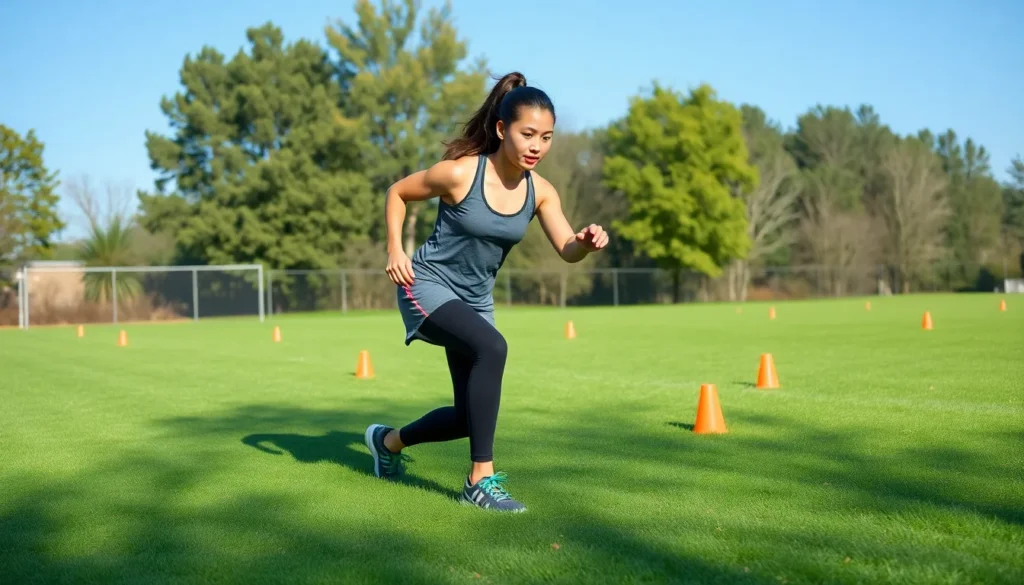
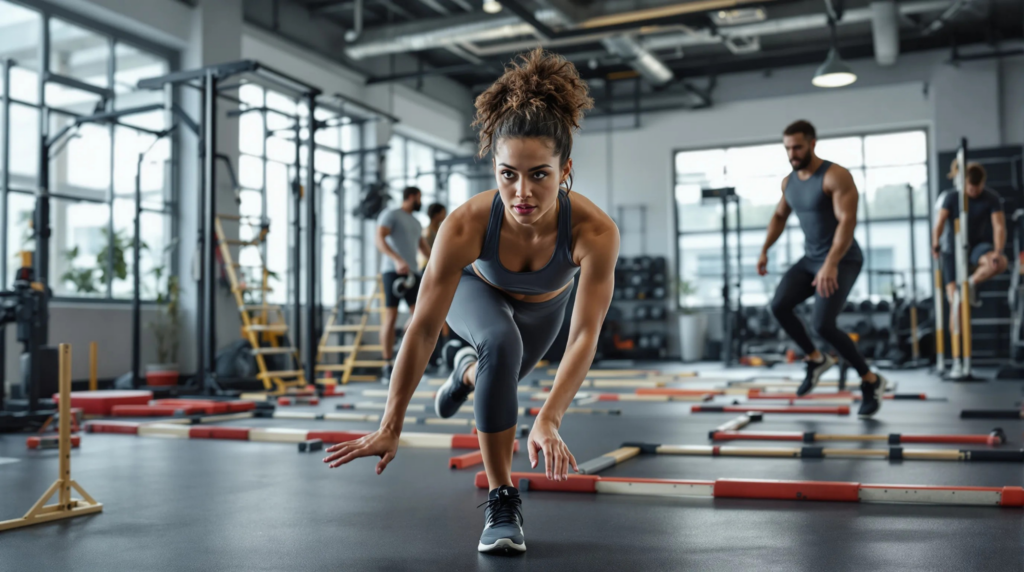
Improving agility and reaction time doesn’t require a different planet, just some focused practice. Incorporating agility drills, like ladder workouts or cone drills, helps sharpen our quickness. Plyometric exercises also play a role, as they enhance power and speed. For reaction time, simple exercises like catching a ball thrown at different angles can be effective. Incorporating reflex training games can also enhance our responsiveness. Consistency is key in both areas, so let’s commit to regular practice sessions to integrate these skills into our fitness routines.